A Willamette Valley Property Owner’s Playbook
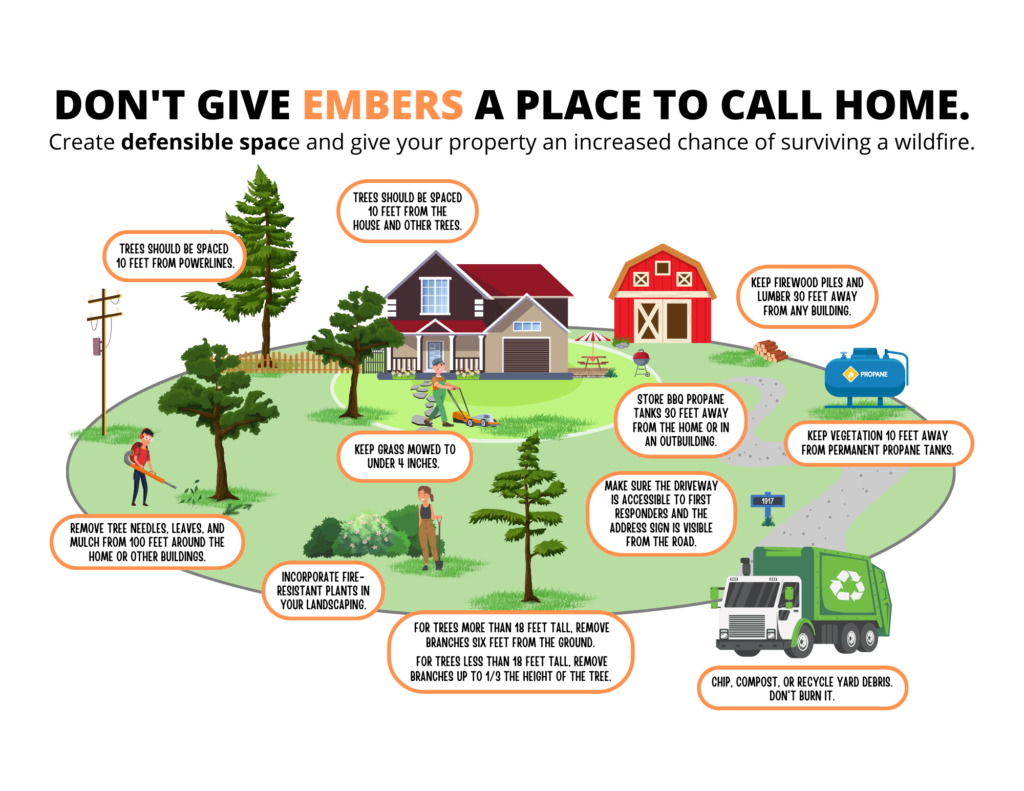
Introduction: Wildfire Defensible Space
Most homes lost to wildfire don’t ignite from a wall of flames—they ignite from a single ember.
In the Willamette Valley, properties often look green, healthy, and safe. But beneath that surface is a different reality: dense fuels, dry late-summer conditions, and wind-driven ember storms capable of traveling miles ahead of an active fire. Those embers don’t need a forest to burn—they need a gutter full of leaves, a wood deck, or a patch of dry grass against your home.
This is where most property owners misunderstand wildfire risk. It’s not about whether a fire reaches your land—it’s about whether your home is vulnerable when it does.
Defensible space is not just clearing brush—it’s a structured, science-backed system designed to interrupt fire behavior, reduce heat intensity, and eliminate the small ignition points that cause total loss. When done correctly, it dramatically increases the likelihood that your home survives—even in a major fire event.
In this guide, we’ll break down exactly how defensible space works in Western Oregon, what standards actually matter, and how to build a property that is not just cleared—but truly prepared.
SECTION 1: UNDERSTANDING FIRE IN THE WILLAMETTE VALLEY
Fuel Profile (What Actually Burns Here)
The Willamette Valley is not a low-risk environment—it is a fuel-dense environment with delayed ignition potential.
Due to the large amount of growth in the spring mixed with rapid drying of fuels throughout the summer, we see fuel loading and risk potential grown in magnitudes every year.
Common fuels:
- Grasses → Fast ignition, rapid spread (flash fuels)
- Blackberry thickets → Extremely volatile, high heat output
- Mixed hardwood/conifer stands → Sustained burn potential
- Slash piles & debris → Long-duration heat sources
- Ornamental vegetation near structures → High-risk ignition points
Fire Behavior Characteristics
- Surface Fire → Ladder Fuels → Crown Fire progression
While surface fires are fairly self explanitory, Ladder fuels may require explaining. Simply put, any combustible material (Bushes, Branches, Brush piles, etc.) that allow for the fire to move from ground level up onto either a structure or into the crown of the stand of trees potentially allowing for rapid fire growth and fast movement.
- Dense understory allows fire to climb vertically
Removing these ladder fuels and controlling surface fuels, fires lose the ability to build momentum making them easier to control and extinguish by fire personnel.
- Crown fires are less common than Eastern Oregon—but still possible under wind events
Once the large overgrowth has been managed, it is much easier for the land owner to manage in the coming years.
Seasonality (Critical in Western Oregon)
- Spring: Rapid growth → fuel accumulation
- Early Summer: Drying phase begins
- Late Summer (Aug–Sept): Peak ignition potential
- First East Wind Event = High-risk trigger window
Wind Factor (The Game Changer)
- East winds:
- Low humidity
- High temperatures
- Rapid fire spread
- Ember cast distance:
- 1/4 mile to 2+ miles ahead of fire front
Key Takeaway
Fire doesn’t need to reach your home directly. If embers can reach it, it’s already at risk.
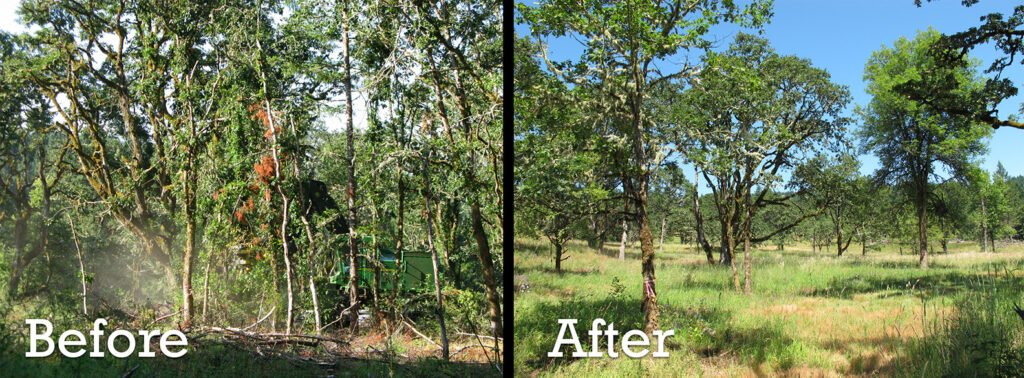
Oak Habitat Restoration for Herbert Farm and Natural Area
SECTION 2: THE THREE DEFENSIBLE SPACE ZONES
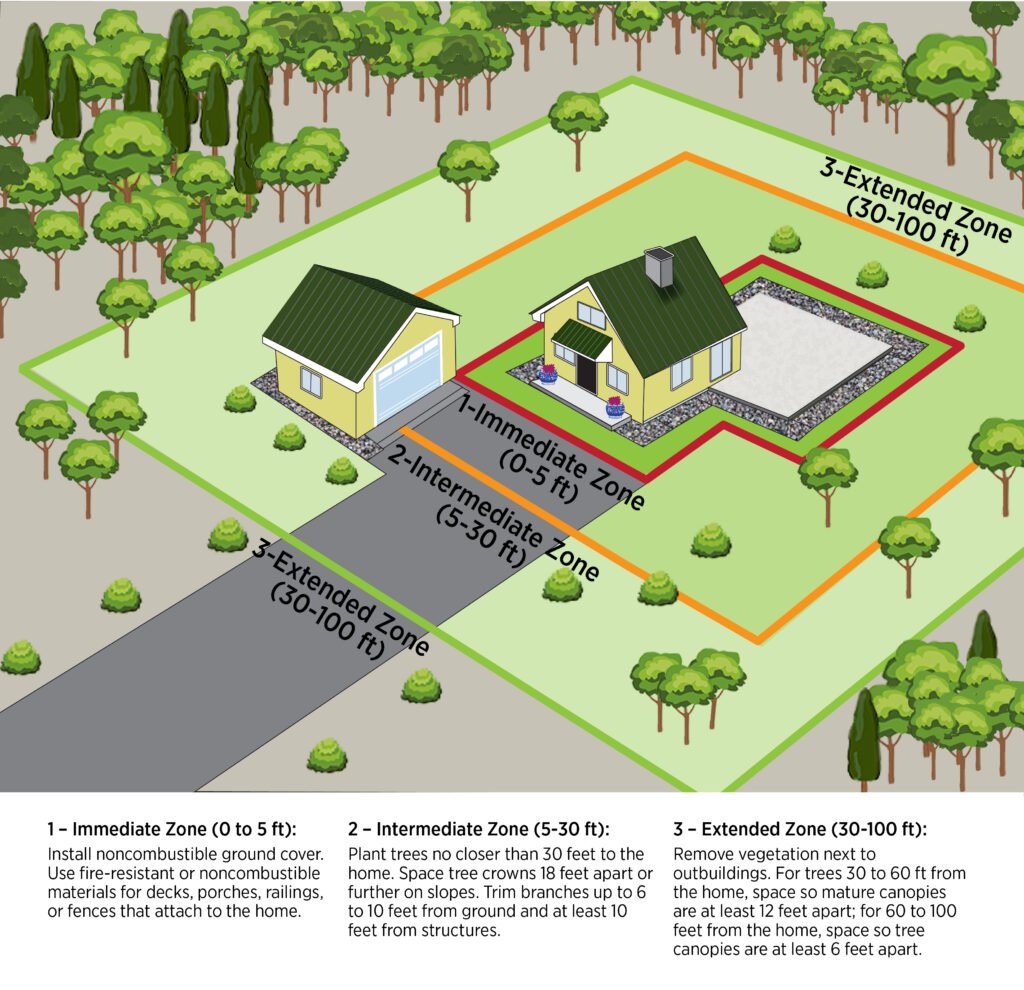
Zone 0 (0–5 feet): Structure Ignition Zone
Where Homes Are Won or Lost
Core Principle
Zone 0 is not about slowing fire—it’s about preventing ignition entirely.
At this distance, flames are not the primary threat. Embers are.
Wind-driven embers can accumulate in corners, land in gutters, and ignite materials that most homeowners never think twice about.
If something in this zone can burn, it eventually will under the right conditions.
Primary Objectives of Zone 0
- Interrupt any pathway for fire to reach the home
- Eliminate all combustible materials
- Remove ember catch points
- Harden the structure against intrusion
1. HORIZONTAL FUEL ELIMINATION (GROUND LEVEL)
What Must Be Removed or Replaced
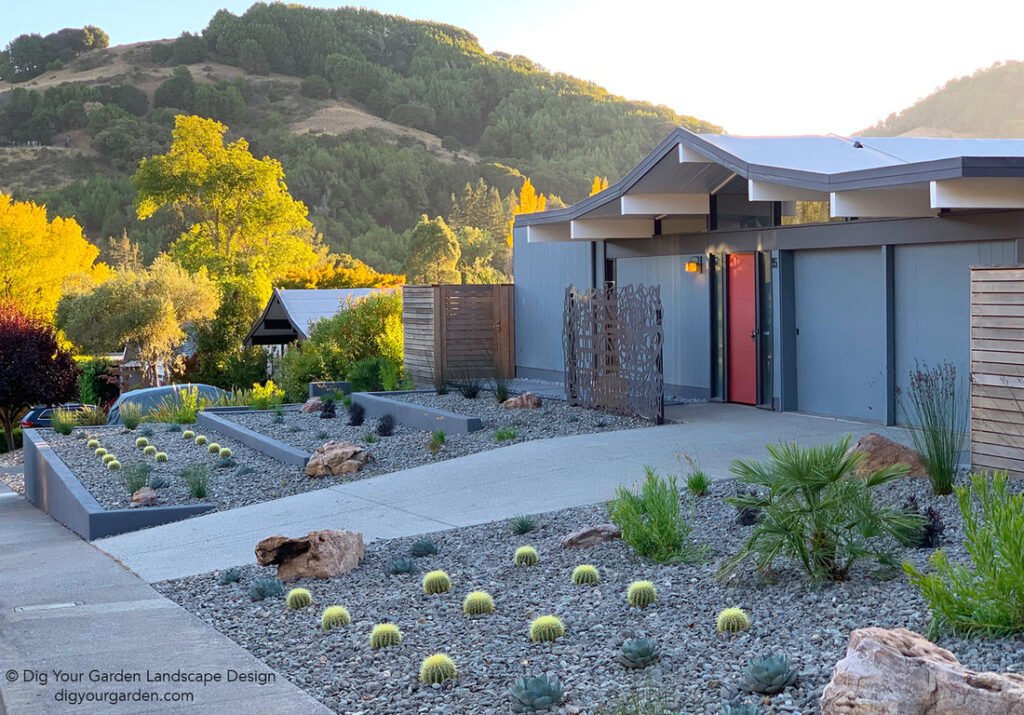
- Bark mulch → replace with:
- Gravel
- Rock
- Pavers
- Dry grass or weeds
- Leaf litter buildup
- Pine needles
- Landscaping debris
Why It Matters
Embers commonly land:
- Along foundations
- In corners where wind eddies form
- Against siding and deck edges
Even a thin layer of dry organic material can ignite and transfer heat directly to your structure.
What Must Be Removed or Replaced
- Bark mulch → replace with:
- Gravel
- Rock
- Pavers
- Dry grass or weeds
- Leaf litter buildup
- Pine needles
- Landscaping debris
Why It Matters
Embers commonly land:
- Along foundations
- In corners where wind eddies form
- Against siding and deck edges
Even a thin layer of dry organic material can ignite and transfer heat directly to your structure.
2. STRUCTURAL EDGE MANAGEMENT (FOUNDATION LINE)
Critical Areas
- Where siding meets ground
- Behind downspouts
- Around utility penetrations
- Corners and recessed areas
Requirements
- Maintain non-combustible buffer (minimum 3–5 feet)
- Seal gaps:
- Foam or flashing where appropriate
- Ensure no vegetation touches:
- Siding
- Trim
- Skirting
Field Observation
Corners of homes are one of the most common ignition points due to debris accumulation and wind behavior.
3. ROOF, GUTTERS, AND EAVES (HIGH-RISK IGNITION ZONES)
Gutters
- Must be:
- Clean of all organic material
- Consider:
- Metal gutter guards (ember-resistant)
Roof
- Remove:
- Moss
- Pine needles
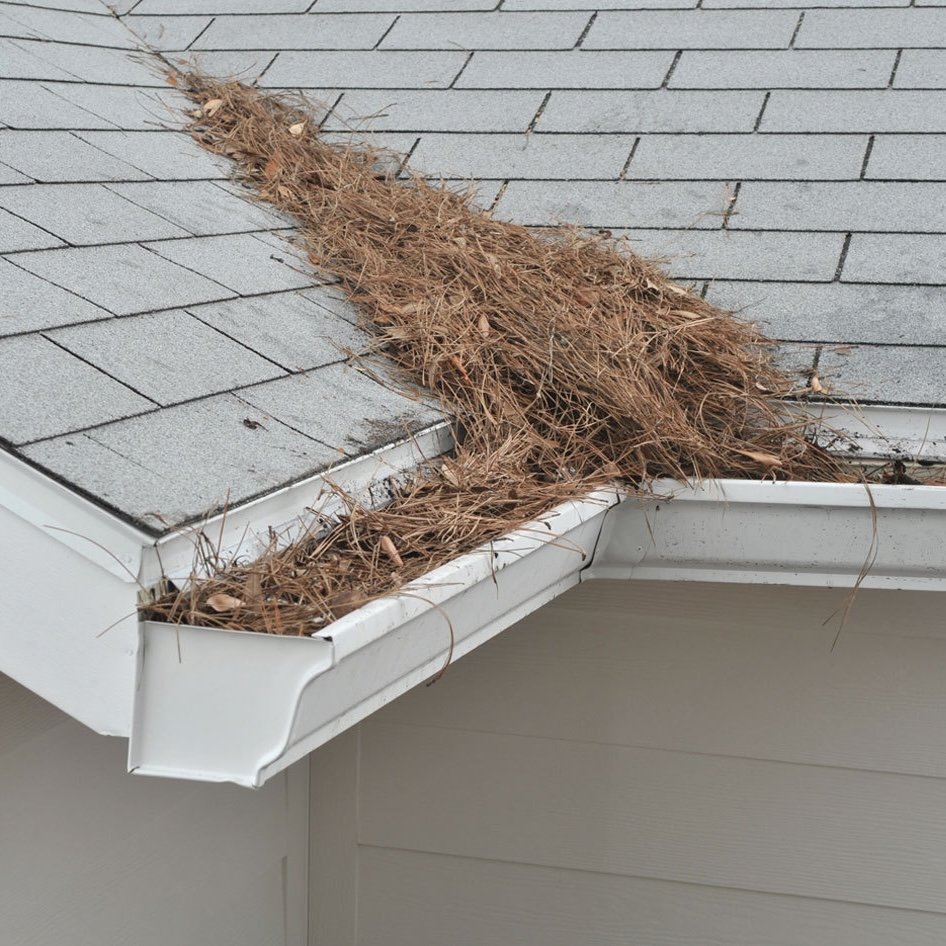
- Leaf buildup (especially in valleys)
Eaves & Rooflines
- Inspect for:
- Open gaps
- Exposed wood
- Box in open eaves where possible
Why This Is Critical
Gutters full of debris are one of the leading causes of home ignition during wildfire events.
4. VENTS AND OPENINGS (EMBER ENTRY POINTS)
Required Upgrades
- Install:
- 1/8” corrosion-resistant metal mesh
- Cover:
- Attic vents
- Crawl space vents
- Gable vents
Additional Considerations
- Ember-resistant vent designs (baffle systems)
- Avoid plastic or vinyl vent covers
Reality
Embers entering vents can ignite:
- Insulation
- Framing
- Stored materials
This often leads to internal structure fires before exterior damage is visible.
5. DECKS, PORCHES, AND ATTACHED STRUCTURES
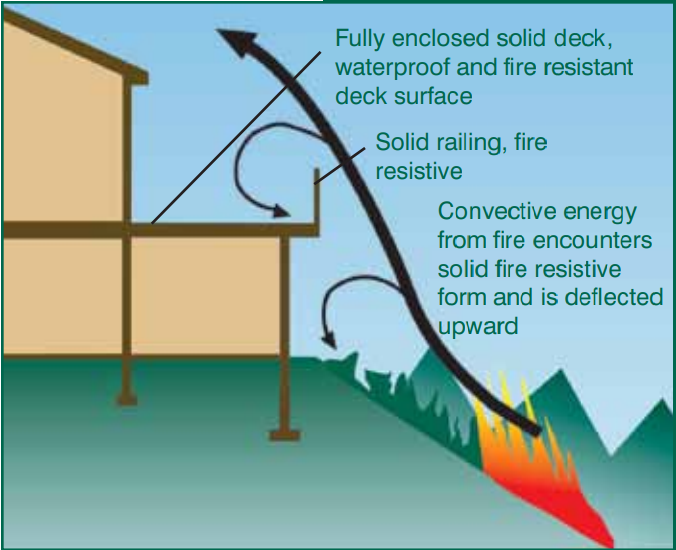
Under Decks
- Remove:
- Leaves
- Needles
- Stored materials
- Options:
- Enclose underside with non-combustible material
- Install gravel base beneath
Deck Surface
- Keep clean at all times during fire season
- Avoid:
- Rugs
- Doormats (combustible)
Attachments
- Pergolas
- Attached patios
- Overhangs
These can act as heat traps and ignition bridges.
6. FENCING AND ATTACHMENT POINTS
Major Risk Factor
Wood fencing attached directly to a house can act as a fuse line, carrying fire straight to the structure.
Recommendations
- Replace first 5–10 feet with:
- Metal fencing
- Non-combustible barrier
- Or create a break between fence and structure
7. FIREWOOD, PROPANE, AND STORAGE
Firewood
- Do NOT store within Zone 0
- Relocate:
- Minimum 30 feet from structure
Propane Tanks
- Maintain clearance:
- 10+ feet from structure
- Clear vegetation around tank
General Storage
Remove:
- Lumber piles
- Cardboard
- Fuel cans
- Equipment with combustible materials
8. WINDOWS, DOORS, AND GLASS EXPOSURE
Weak Points
- Single-pane windows
- Wood-framed windows
Recommendations
- Dual-pane tempered glass preferred
- Minimize:
- Combustible materials directly below windows
Why
Radiant heat + ember contact can:
- Crack glass
- Allow ember intrusion
9. MAINTENANCE (THE MOST OVERLOOKED FACTOR)
Zone 0 Is Not Static
- Wind redistributes debris constantly
- Vegetation regrows
- Seasonal changes matter
Minimum Maintenance Schedule
- Spring:
- Full cleanup
- Mid-summer:
- Inspection + touch-up
- Before red flag events:
- Immediate clearing
10. THE REALITY CHECK (FIELD + FIRE SERVICE PERSPECTIVE)
What Actually Causes Loss
- Debris in gutters
- Leaves under decks
- Wood touching siding
- Ember entry through vents
What Saves Homes
- Clean, non-combustible perimeter
- Sealed structure
- No ignition points within 5 feet
In many wildfire events, homes with poor Zone 0 fail—even when surrounding vegetation is managed.
Bottom Line
Zone 0 is not landscaping.
Zone 0 is structural defense.
If this zone is not properly addressed:
The probability of structure loss increases dramatically
Zone 1 and Zone 2 become significantly less effective
Firefighters are less likely to engage
Zone 1 (5–30 feet): Fire Behavior Reduction Zone
Primary Objective
Reduce flame length and prevent direct flame contact.
Vegetation Management
- Remove:
- Dead vegetation
- Downed branches
- Thin shrubs:
- Avoid continuous horizontal fuel beds
- Tree spacing:
- Minimum 10 ft between crowns
- Increase spacing on slopes
Vertical Separation
- Remove ladder fuels:
- No vegetation under tree canopies
- Prune trees:
- 6–10 ft above ground (or 1/3 tree height for smaller trees)
Irrigation & Maintenance
- Maintain:
- Green lawns
- Moist landscaping
- Avoid:
- Resin-heavy plants near structures
Field Reality
- Blackberry + grass combos = high-speed ignition zones
- Decorative landscaping often becomes the ignition pathway
Zone 2 (30–100+ feet): Fuel Load Management Zone
Primary Objective
Slow fire spread and reduce intensity before it reaches Zone 1.
Forest Management
- Thin trees:
- Break canopy continuity
- Remove:
- Dead standing trees (snags near structures)
- Downed woody debris
- Manage:
- Slash (mulch, chip, or remove)
Terrain Considerations
- Increase spacing on slopes:
- Fire moves uphill faster
- Create:
- Breaks in vegetation continuity
Extended Zone (100–200+ ft)
Recommended when:
- Heavy timber present
- Steep slopes
- Wind exposure corridors
SECTION 3: COMMON FAILURES
1. Focusing on Clearing, Not Ignition
- Clearing acreage but ignoring:
- Gutters
- Roof debris
- Decks
2. False Sense of Security
- “It looks cleared” ≠ effective defensible space
- Improper spacing still allows fire spread
3. Leaving Heat Sources
- Slash piles:
- Burn for hours or days
- Radiate heat to structures
4. Ignoring Ember Pathways
- Vents
- Open eaves
- Combustible fencing connected to house
5. Poor Maintenance
- Defensible space is not one-time work
- Annual regrowth = renewed risk
SECTION 4: HOME HARDENING
Why It Matters
Defensible space reduces fire intensity.
Home hardening prevents ignition.
Critical Components
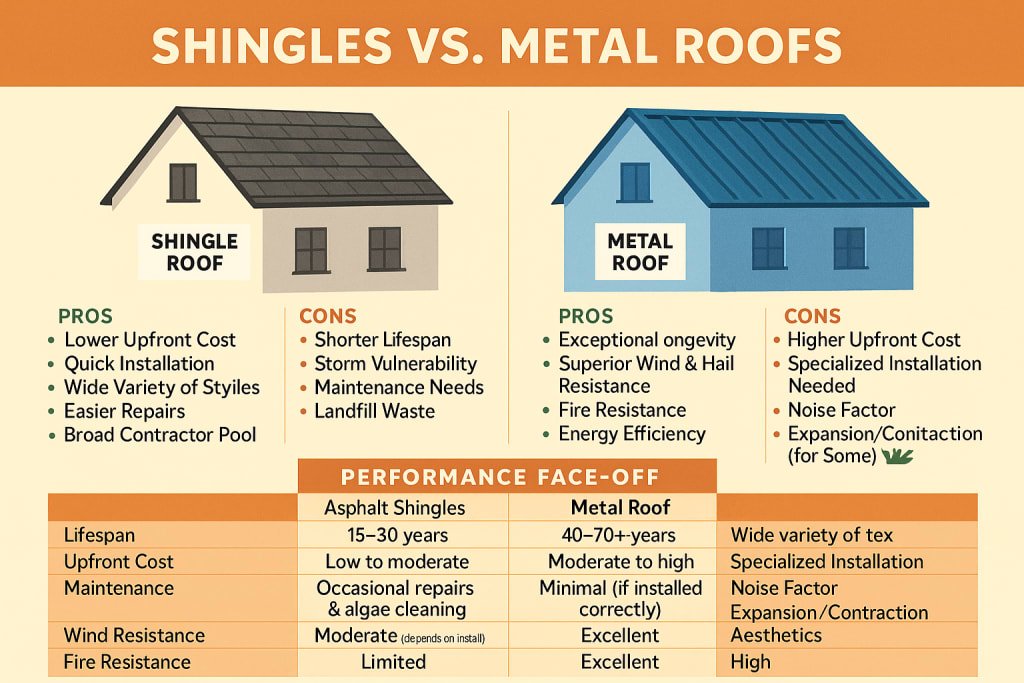
Roofing
- Class A materials:
- Metal
- Composite shingles
- Avoid:
- Wood shake roofs
Vents
- Install ember-resistant vents:
- 1/8” corrosion-resistant mesh
- Cover:
- Attic vents
- Crawl space vents
Siding
- Preferred:
- Fiber cement
- Stucco
- Avoid:
- Untreated wood siding
Windows
- Dual-pane tempered glass preferred
Decking
- Composite or ignition-resistant materials
- Enclose underside where possible
Key Takeaway
If embers can enter or land on combustible material, the structure is still vulnerable—no matter how much land is cleared.
SECTION 5: ACCESS, WATER, AND RESPONSE
Access Requirements
- Width:
- Minimum 12 ft (15 ft preferred)
- 10′ fire break each side
- Pull offs if longer than 150′
- Vertical clearance:
- 13.5–15 ft
- Turnarounds:
- Required for fire apparatus
Why It Matters
If crews cannot safely access your property:
- They may not engage
- Your home may be skipped during triage
Water Supply
Options:
- Hydrants (ideal)
- Draftable sources:
- Tanks (2,500–10,000+ gallons)
- Ponds
Operational Reality
- During large fires:
- Resources are limited
- Homes are triaged based on:
- Defensibility
- Access
- Safety
SECTION 6: EQUIPMENT & METHODS
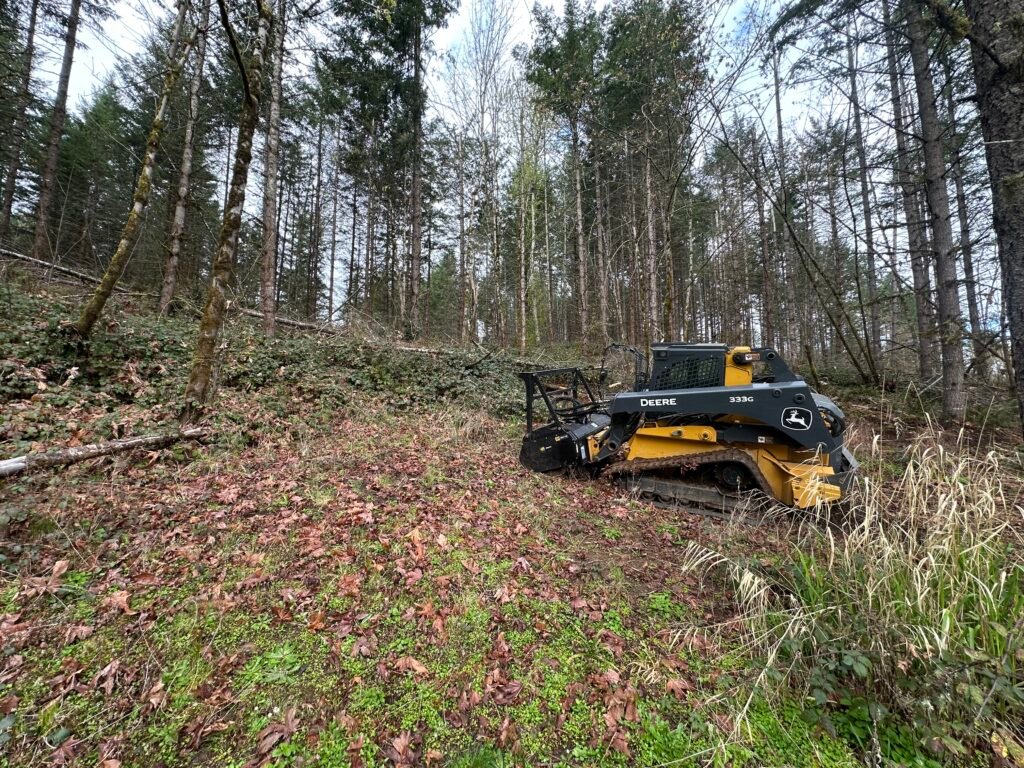
Forestry Mulching
- Best for:
- Dense brush
- Small trees (<12” diameter)
- Benefits:
- One-pass processing
- Reduces hauling
Mowing / Brush Cutting
- Best for:
- Grasslands
- Light vegetation
Excavation & Mechanical Clearing
- Used for:
- Heavy fuels
- Stumps
- Site prep
Hand Crews
- Precision work near structures
- Ladder fuel removal
Material Handling
- Mulch in place (nutrient return)
- Haul off-site (dump trailers)
- Controlled burn (when permitted)
Professional vs DIY
- DIY:
- Lower cost upfront
- Higher time investment
- More effort involved as homeowners generally do not have access to machinery
- Professional:
- Faster (1-2 days can clear up to 4 acres of land
- Safer for all involved
- More effective at scale
- Equipment access
SECTION 7: REGULATIONS & INSURANCE
Regulatory Direction
- Oregon moving toward:
- Enforced defensible space standards
- WUI (Wildland Urban Interface) codes
Insurance Trends
- Increased:
- Inspections
- Non-renewals
- Requirements:
- Proof of mitigation
- Clearance documentation
Standards
- National Fire Protection Association Firewise principles:
- Zone-based mitigation
- Structure ignition focus
Key Insight
Defensible space is shifting from recommendation → requirement.
SECTION 8: BUILDING A PLAN
Step 1: Start at the Structure
- Address Zone 0 first (highest ROI)
Step 2: Map the Property
- Identify:
- Slopes
- Fuel density
- Access points
Step 3: Prioritize Work
- Immediate threats:
- Structure-adjacent fuels
- Secondary:
- Outer zones
Step 4: Choose Execution Method
- DIY vs contractor vs hybrid
Step 5: Schedule Work
Spring: Major clearing
Summer: Maintenance
Fall: Clean up
SECTION 9: COST VS CONSEQUENCE
Typical Costs (Willamette Valley)
- Small residential: $2K–$8K
- Moderate acreage: $8K–$20K
- Large/heavy fuels: $20K–$30K+
Variables
- Density
- Terrain
- Access
- Disposal requirements
Compare to Loss
- Home value
- Insurance denial
- Rebuild timelines
Key Framing
Defensible space is not an expense—it’s risk mitigation.
SECTION 10: FIELD INSIGHT
What Actually Fails
- “Green” properties with:
- Dense understory
- Poor maintenance
What Survives
- Clean Zone 0
- Managed vegetation
- Hardened structures
Observed Patterns
- Ember ignition > flame contact
- Maintenance matters more than initial clearing
Positioning Statement
You’re not selling clearing—you’re providing:
- Risk reduction
- Property protection
- Long-term land management
Emerald Landworks: The Willamette Valley’s Premier Defensible Space Partner
The team at Emerald Landworks works with forested and rural properties throughout Lane County and the surrounding regions of western Oregon, specializing in vegetation management, forestry mulching, and wildfire defensible space preparation. Drawing on years of hands-on experience in wildfire suppression and land stewardship, the company focuses on practical, science-informed approaches to restoring balance in forest ecosystems.
Emerald Landworks works with landowners to address invasive vegetation, reduce hazardous fuel loads, and reclaim overgrown properties in ways that support long-term land health. By combining modern equipment with an understanding of Pacific Northwest forest ecology, the team helps property owners improve access to their land while protecting soil, wildlife habitat, and the resilience of local forests.
Based in Oregon’s Willamette Valley, Emerald Landworks serves private landowners, rural properties, and land managers seeking responsible vegetation management solutions that prioritize both safety and environmental stewardship.