Introduction
Across Oregon’s Willamette Valley, many landowners are rediscovering the value of small-scale agriculture. From market gardens and homesteads to orchards, vineyards, and pastureland, successful farming begins with proper land preparation.
Land that has been unmanaged for years often contains dense brush, invasive vegetation, woody debris, compacted soil, and poor drainage. If these conditions are not addressed early, agricultural projects frequently struggle with low productivity, erosion, and soil degradation.
Effective land preparation focuses on vegetation management, soil health improvement, water management, and long-term land stewardship. When these factors are addressed correctly, previously neglected land can be transformed into productive agricultural ground.
This guide explains how agricultural land is typically prepared in western Oregon and what landowners should consider before beginning a project.
Why Proper Land Preparation Matters
Agricultural productivity depends heavily on the condition of the land itself. Proper preparation improves:
- soil structure and fertility
- water infiltration and drainage
- equipment accessibility
- long-term land productivity
According to the USDA Natural Resources Conservation Service (NRCS), soil health—including soil structure, organic matter, and water movement—is one of the most important factors influencing agricultural success.
Many agricultural setbacks occur not because of crop selection, but because the land was never properly prepared for cultivation.
Step 1: Evaluating the Property
Before clearing vegetation or disturbing soil, the first step is understanding the land’s physical and biological characteristics.
Soil Testing and Soil Chemistry
A soil test identifies key characteristics including:
- soil pH
- nutrient levels (nitrogen, phosphorus, potassium)
- organic matter content
- potential deficiencies
The Oregon State University Extension Service recommends soil testing before establishing crops, orchards, or pasture.
Many soils in western Oregon trend slightly acidic, which can limit nutrient availability for certain crops. In these cases, agricultural lime is commonly applied to balance soil pH.
More information on soil testing can be found here:
https://extension.oregonstate.edu/publications/ec628
Terrain and Drainage Assessment
Understanding how water moves across a property is critical before beginning land development.
A site evaluation typically considers:
- slope and erosion potential
- seasonal drainage patterns
- saturated soil areas
- potential flood zones
In the Willamette Valley, heavy winter rainfall can saturate soils for extended periods. Planning drainage and field layout early helps prevent long-term problems with root development and soil structure.
Guidance on soil drainage and agricultural suitability is available through the USDA NRCS:
Understanding how water moves across a property is critical before beginning land development.
A site evaluation typically considers:
- slope and erosion potential
- seasonal drainage patterns
- saturated soil areas
- potential flood zones
In the Willamette Valley, heavy winter rainfall can saturate soils for extended periods. Planning drainage and field layout early helps prevent long-term problems with root development and soil structure.
Guidance on soil drainage and agricultural suitability is available through the USDA NRCS:
https://www.nrcs.usda.gov/resources/guides-and-instructions/soil-health
Step 2: Vegetation Removal and Land Clearing
Most agricultural projects begin with removing vegetation that competes with crops for sunlight, water, and nutrients.
Forestry Mulching
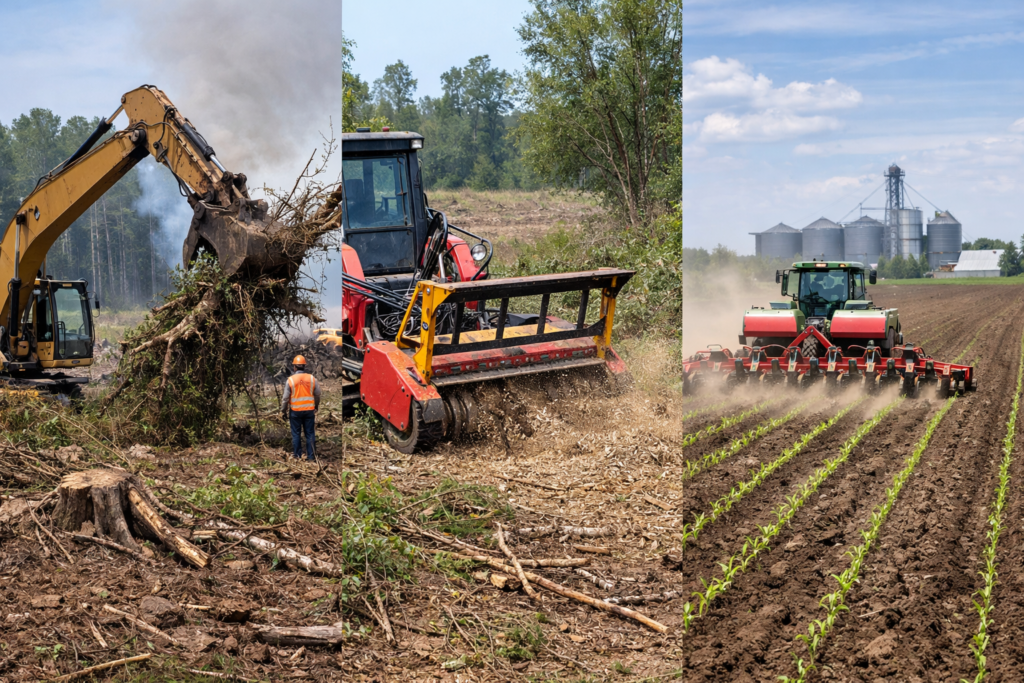
Forestry mulching is increasingly used in modern land preparation. This method grinds vegetation directly into mulch, leaving organic material distributed across the soil surface.
Benefits include:
- reducing erosion by protecting exposed soil
- returning organic material to the ground
- eliminating the need to burn or haul debris
- minimizing soil disturbance compared to heavy clearing methods
From field experience working on overgrown properties throughout western Oregon, mulching often provides an efficient approach for reclaiming land intended for:
- pasture development
- orchard planting
- vineyard establishment
- wildlife habitat restoration
The U.S. Forest Service recognizes mulching as a vegetation management approach that can reduce biomass while minimizing soil disturbance.
Mechanical Vegetation Removal
Some properties—especially those with dense forest, heavy brush, or large woody debris—require mechanical clearing methods before agricultural use is possible. In these situations, equipment such as excavators, bulldozers, grinders, and haul trucks may be used to remove and process vegetation efficiently.
Excavators and Vegetation Raking
Medium to large class excavators and bulldozers are commonly used to remove trees, stumps, and root systems. When equipped with root rakes or brush rakes, excavators can separate vegetation from soil while leaving much of the topsoil in place. Bulldozers can push the top soil toward the collection point for seapration and grinding.
This allows operators to:
- remove trees and stumps
- rake surface debris such as branches and brush
- gather vegetation into piles for processing
Excavators are particularly useful when clearing larger trees or selectively removing vegetation while preserving soil structure.
Bulldozers for Consolidating Vegetation
Bulldozers equipped with root rakes or brush blades can efficiently push and gather vegetation across larger areas. The rake design allows soil to fall through the tines while capturing woody material.
Bulldozers are commonly used to:
- push vegetation into piles or windrows
- remove shallow roots
- level ground after clearing
- establish access routes or field boundaries
Grinding and Debris Processing
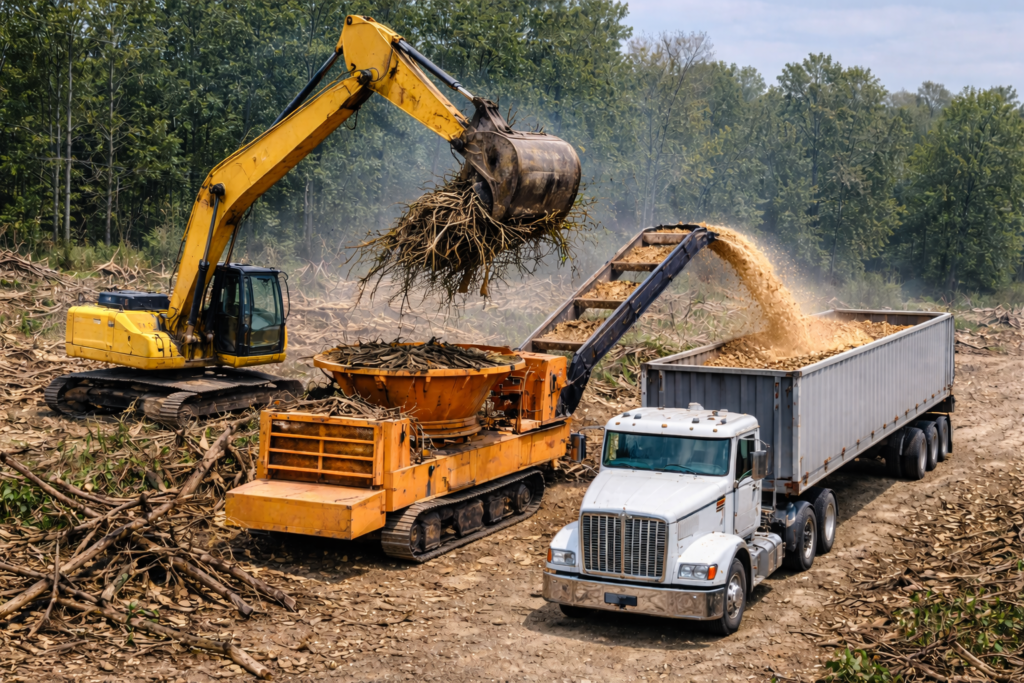
Once vegetation has been gathered, tracked grinders or tub grinders are often used to process woody debris. These machines reduce trees, branches, and root material into mulch or wood chips.
Processing debris in this way can:
- reduce the need for open burning
- create mulch for erosion protection
- prepare the site for agricultural use
Material Removal and Hauling
In some projects, excess woody debris must be transported off-site. Haul trucks or dump trucks may be used to move logs, root balls, or wood waste to recycling or disposal facilities.
Matching the Method to the Property
The best clearing method depends on several factors, including vegetation density, terrain, soil conditions, and the intended agricultural use of the land. Many projects use a combination of techniques to efficiently convert overgrown land into productive farmland while protecting soil health.
Prescribed Burning in Land Stewardship and Agriculture
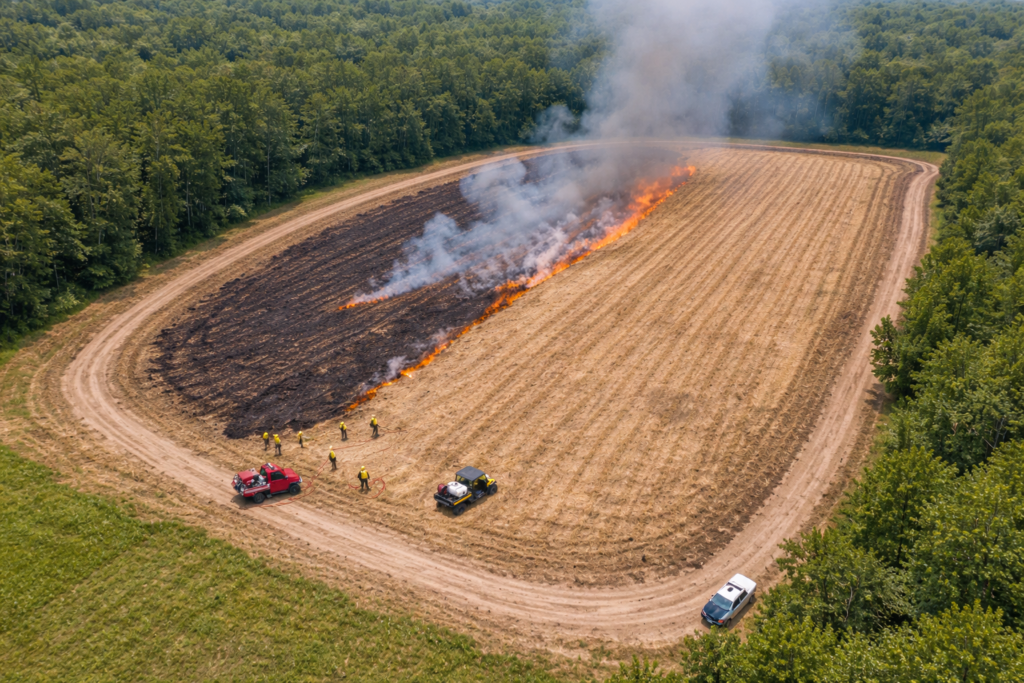
In some situations, prescribed fire (controlled burning) can play a role in agricultural land management. When carefully planned and conducted under appropriate conditions, prescribed burning has historically been used to manage vegetation, improve pasture productivity, and maintain healthy ecosystems.
Historical Use of Fire in Land Management
Long before modern agricultural practices, Indigenous peoples throughout the Pacific Northwest used intentional burning to shape landscapes and improve land productivity.
These cultural burning practices helped to:
- reduce dense brush and woody vegetation
- promote growth of edible plants and grasses
- improve wildlife habitat
- reduce fuel buildup that contributes to severe wildfires
Research from the U.S. Forest Service and Oregon State University shows that many landscapes in western Oregon historically experienced frequent, low-intensity fires that maintained open forests and productive grasslands.
Over time, fire suppression policies greatly reduced these natural and cultural fire cycles. As a result, many landscapes now contain heavier vegetation buildup than they historically did.
More information on the history of fire stewardship in the region can be found through the U.S. Forest Service:
https://www.fs.usda.gov/managing-land/fire
Agricultural Benefits of Prescribed Fire
When conducted under controlled conditions and within regulatory guidelines, prescribed burning can provide several agricultural benefits.
These include:
Vegetation Reduction
Fire can remove accumulated brush, dry grass, and plant residue that may otherwise compete with crops or pasture.
Nutrient Recycling
Burning plant material returns nutrients such as potassium and phosphorus to the soil in the form of ash, which can temporarily increase nutrient availability for new plant growth.
Pasture and Forage Improvement
Prescribed fire has historically been used to rejuvenate grasslands by removing dead vegetation and stimulating new growth. This practice can improve grazing conditions for livestock when combined with proper pasture management.
Pest and Disease Reduction
In certain agricultural systems, fire can reduce overwintering pests, plant pathogens, and invasive plant seeds that accumulate in unmanaged vegetation.
Regulatory Considerations in Oregon
Prescribed burning in Oregon is regulated to protect air quality and reduce wildfire risk. Landowners must follow guidance provided by state agencies and local authorities before conducting any burn.
Sunlight Availability and Tree Removal Planning
One of the most important — and often overlooked — factors in preparing agricultural land is sunlight exposure. Most crops require substantial direct sunlight to grow efficiently, and improper clearing can leave fields partially shaded for large portions of the growing season.
In Oregon’s Willamette Valley, the sun travels across the southern portion of the sky, rising in the east and setting in the west. During the peak growing season, the sun reaches higher angles in the sky, providing longer daylight hours. In spring and fall, however, the sun sits lower on the horizon, which can cause trees and forest edges to cast long shadows across agricultural fields.
When clearing land for agriculture, it is often beneficial to evaluate:
- the orientation of the field relative to sunrise and sunset
- the height and density of nearby tree lines
- seasonal changes in sun angle
- the number of hours of direct sunlight reaching the soil surface
Tall trees along the southern edge of a field can significantly reduce sunlight exposure during key growing periods. Removing or thinning these trees may dramatically improve the amount of available light reaching crops.
Similarly, heavily forested properties may require selective clearing to create open areas where sunlight can reach the ground for most of the day.
From a practical land management perspective, experienced land preparation often involves evaluating the path of the sun across the property and prioritizing clearing where shading would otherwise limit agricultural productivity.
Information on crop sunlight requirements and plant growth factors is available through the Oregon State University Extension Service:
https://extension.oregonstate.edu
Managing Invasive Vegetation
Neglected land in western Oregon is frequently dominated by aggressive invasive plants such as:
- Himalayan blackberry
- Scotch broom
- English ivy
- reed canary grass
These species can rapidly reclaim cleared land if not addressed properly.
According to the Oregon Department of Forestry, long-term invasive plant management typically requires a combination of mechanical removal and ongoing monitoring.
In practice, vegetation control strategies may include:
- mechanical clearing
- mulching
- targeted herbicide use where appropriate
- periodic follow-up maintenance
Step 3: Improving Soil Structure
After vegetation is cleared, soil conditions must be evaluated and improved before planting.
Breaking Soil Compaction
Compaction restricts root growth and prevents water from infiltrating soil properly. It often occurs from:
- historic livestock traffic
- heavy equipment use
- naturally dense soils common in the Willamette Valley
Techniques used to address compaction include:
- subsoiling or ripping
- aeration
- controlled tillage
The USDA NRCS notes that improving soil structure significantly increases water absorption and plant productivity.
Increasing Organic Matter
Organic matter plays a central role in soil fertility and long-term productivity.
Adding organic material helps improve:
- soil structure
- microbial activity
- moisture retention
- nutrient availability
Common organic inputs include:
- compost
- manure
- mulched vegetation
- cover crops
Research from the Oregon State University Extension Service shows that increasing organic matter improves soil resilience and crop performance over time.
https://extension.oregonstate.edu
Step 4: Erosion Control and Soil Protection
Freshly disturbed soil is vulnerable to erosion, especially during Oregon’s rainy season.
Preventing soil loss is essential to preserving fertility.
Erosion Prevention Strategies
Effective methods include:
- maintaining mulch cover
- planting cover crops
- contour grading on slopes
- establishing vegetative buffers near waterways
The U.S. Forest Service identifies early-stage soil protection as one of the most important steps in preventing long-term land degradation.
Step 5: Farm Access and Field Infrastructure
After vegetation is cleared and soil conditions stabilized, attention shifts to infrastructure that supports agricultural operations.
Equipment Access and Field Layout
Agricultural land must allow safe and efficient equipment movement. Improvements may include:
- installing access roads
- grading uneven terrain
- removing large stumps or obstacles
- creating equipment entry points for fields
Well-designed access reduces soil disturbance and improves efficiency during planting, harvesting, and maintenance.
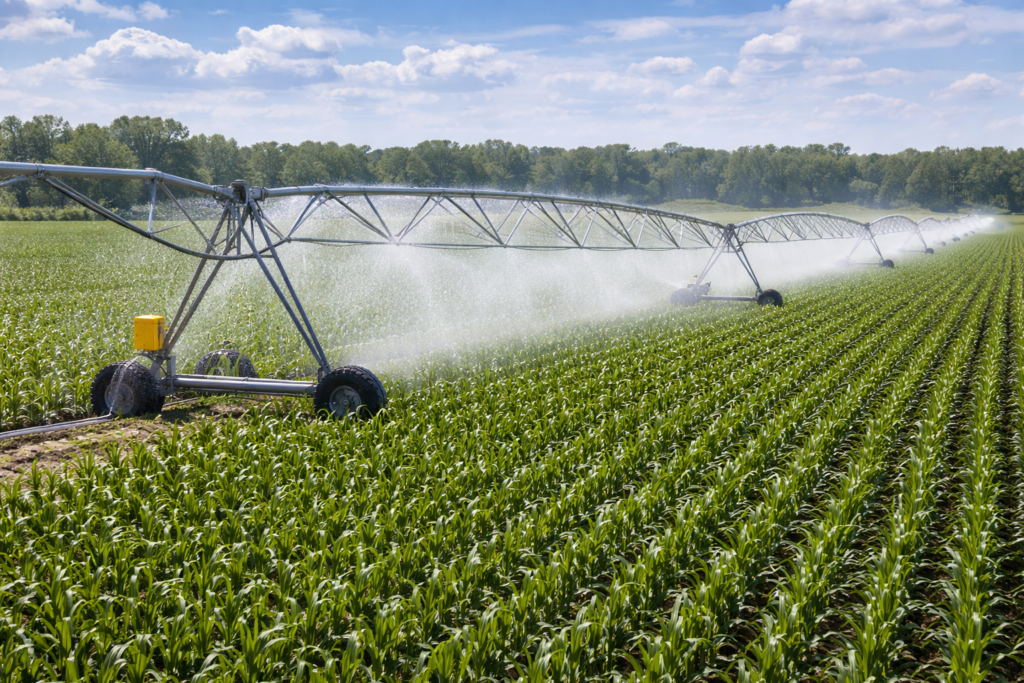
Irrigation and Water Management
Although the Willamette Valley receives significant rainfall during winter months, many crops require supplemental irrigation during dry summer periods.
Water management strategies may include:
- irrigation systems
- natural water easements from rivers and streams
- drainage improvements
- water storage ponds
- erosion-control swales
The USDA NRCS provides guidance on irrigation planning and agricultural water management:
https://www.nrcs.usda.gov/programs-initiatives/irrigation
Agriculture and Wildfire Awareness
Even agricultural landscapes can be affected by wildfire.
Maintaining boundary clearing, access lanes, and fuel breaks around fields can help reduce fire spread from surrounding vegetation.
In rural Oregon, these agricultural boundaries are sometimes combined with vegetation management techniques similar to those used in wildfire fuels reduction to help protect crops, fencing, and agricultural infrastructure.
Preparing Land for Agriculture in the Willamette Valley
Western Oregon’s landscape presents several factors that influence land preparation.
Typical conditions include:
- rapid vegetation growth
- dense brush on unmanaged land
- soils that retain winter moisture
- strong agricultural productivity potential
Because of these conditions, land preparation commonly focuses on:
- invasive vegetation removal
- soil structure improvement
- drainage planning
- erosion prevention
When these elements are addressed early, previously unmanaged land can often be restored to productive agricultural use.
Common Mistakes When Preparing Agricultural Land
Landowners sometimes encounter problems when land development begins without a clear plan.
Common issues include:
- excessive soil disturbance
- removing topsoil during clearing
- ignoring natural drainage patterns
- failing to control invasive plants
- operating heavy equipment on saturated soils
Careful planning and responsible land stewardship help prevent these problems and protect long-term soil productivity.
Frequently Asked Questions
How much clearing is needed before farming?
The amount of clearing depends on vegetation density and the intended agricultural use. Pasture conversion may require minimal clearing, while orchards or vineyards often require more extensive site preparation.
Is forestry mulching better than bulldozing?
In many cases, yes. Forestry mulching generally preserves soil structure and organic matter while reducing erosion risk compared to traditional clearing methods.
How long does agricultural land preparation take?
Timelines vary depending on property size, terrain, and vegetation density. Smaller parcels may take several days, while larger projects may take several weeks.
Conclusion
Preparing land for agriculture requires careful planning and an understanding of soil, vegetation, and water movement. By evaluating site conditions, managing invasive vegetation, improving soil structure, and protecting against erosion, landowners can establish a foundation for productive farmland.
In Oregon’s Willamette Valley, where fertile soils meet dense vegetation and seasonal rainfall, thoughtful preparation plays an important role in long-term agricultural success.
Sources
Oregon State University Extension Service
Soil Testing Guide
https://extension.oregonstate.edu/publications/ec628
Soil Health Resources
https://extension.oregonstate.edu
USDA Natural Resources Conservation Service
Soil Health and Agricultural Land Management
https://www.nrcs.usda.gov/resources/guides-and-instructions/soil-health
Irrigation and Water Management
https://www.nrcs.usda.gov/programs-initiatives/irrigation
Oregon Department of Forestry
Vegetation and Invasive Plant Resources
https://www.oregon.gov/odf/
U.S. Forest Service
Vegetation Management and Land Stewardship
https://www.fs.usda.gov/
About the Author:
The team at Emerald Landworks works with forested and rural properties throughout Lane County and the surrounding regions of western Oregon, specializing in vegetation management, forestry mulching, and wildfire defensible space preparation. Drawing on years of hands-on experience in wildfire suppression and land stewardship, the company focuses on practical, science-informed approaches to restoring balance in forest ecosystems.
Emerald Landworks works with landowners to address invasive vegetation, reduce hazardous fuel loads, and reclaim overgrown properties in ways that support long-term land health. By combining modern equipment with an understanding of Pacific Northwest forest ecology, the team helps property owners improve access to their land while protecting soil, wildlife habitat, and the resilience of local forests.
Based in Oregon’s Willamette Valley, Emerald Landworks serves private landowners, rural properties, and land managers seeking responsible vegetation management solutions that prioritize both safety and environmental stewardship.