Many landowners assume that if a forest is green and full of vegetation, it must be healthy. Dense brush, thick groundcover, and fast-growing plants often look like signs of a thriving ecosystem.
But in many forests across Oregon, those same conditions can actually signal an imbalance.
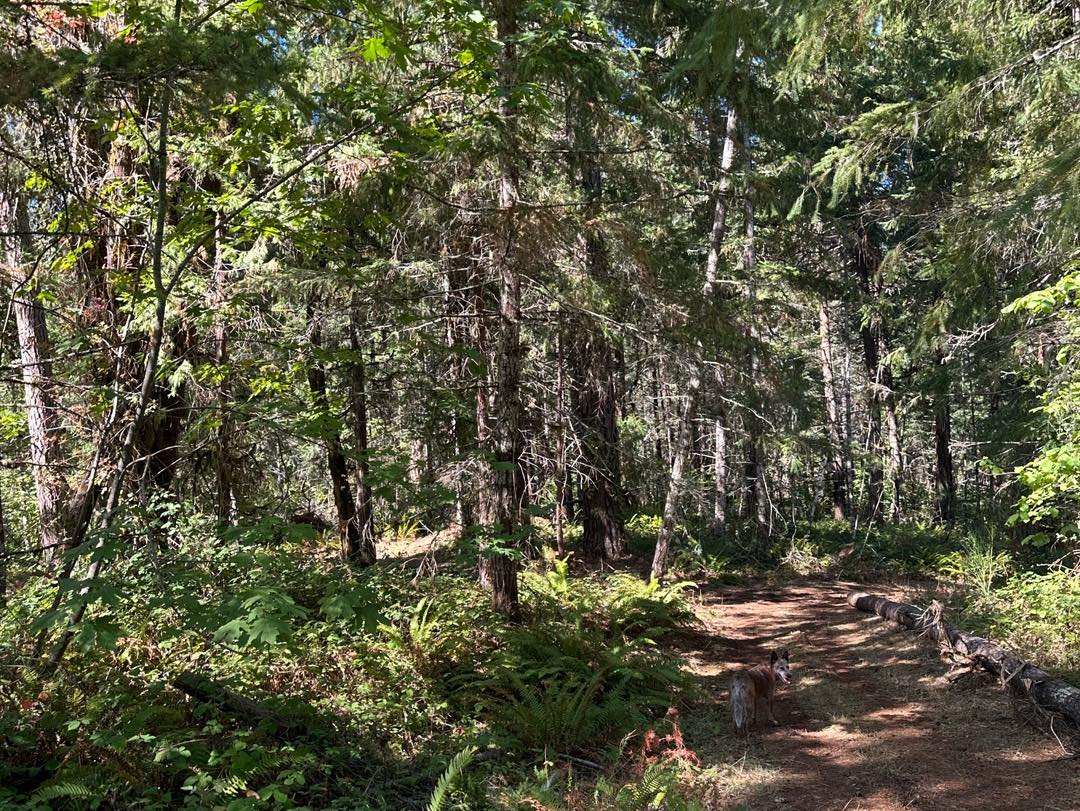
On properties throughout the Willamette Valley and surrounding regions, it has become increasingly common to see landscapes where dense blackberry thickets, Scotch broom, and climbing ivy dominate the understory. In many cases these plants have gradually taken over areas where native grasses, shrubs, and young trees once grew.
Understanding why this happens—and how forests naturally function—can help landowners make better decisions about how to care for their land.
What Landowners Are Often Seeing on Their Properties
Many forested properties share a similar pattern.
From a distance, the land appears healthy. Tall trees form a canopy overhead and the ground is covered in thick greenery.
But when walking through the property, the conditions can be very different.
Common observations include:
- blackberry thickets dense enough to block access
- Scotch broom spreading along disturbed soil and forest edges
- ivy climbing up mature trees
- thick brush and young trees growing tightly beneath the canopy
On many properties around Lane County and across western Oregon, these plants gradually crowd out native vegetation. Over time, areas that once supported a variety of plant species become dominated by a few aggressive plants that spread quickly and grow densely.
This shift in vegetation can change the way the forest functions.
Why Healthy Forests Often Have More Space Than People Expect
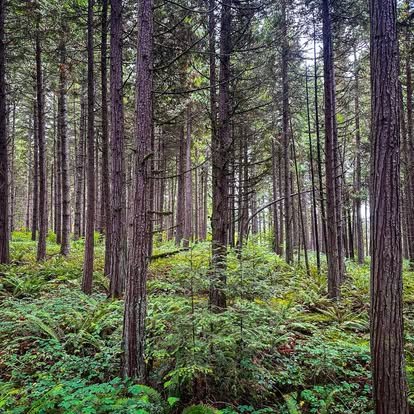
Forests in the Pacific Northwest did not historically grow as dense as many people imagine.
Before modern settlement, these landscapes experienced regular disturbances that helped regulate vegetation growth. Natural wildfire, storms, and traditional Indigenous land stewardship practices periodically cleared brush and small trees while leaving larger trees intact.
These disturbances created forests that typically included:
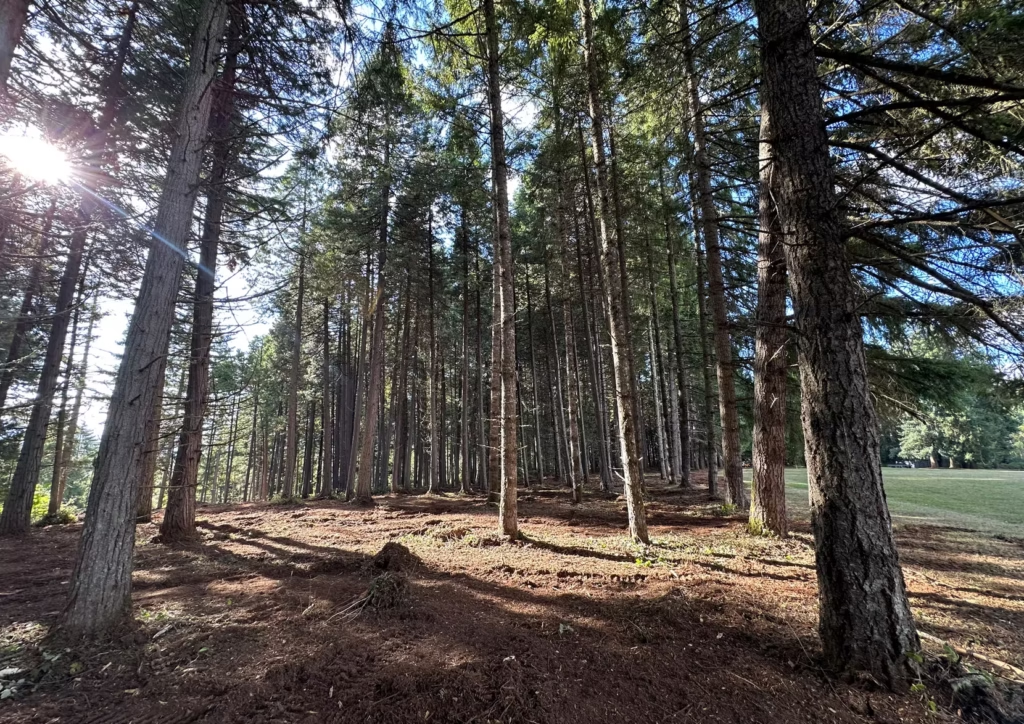
- mature trees spaced apart rather than crowded together
- a mixture of grasses, shrubs, and young trees
- openings where sunlight could reach the ground
- patches of vegetation rather than continuous dense growth
This structure allowed forests to regenerate naturally and supported a wide diversity of plant and animal life.
Research from the U.S. Forest Service shows that many western forests today contain far more trees per acre than they historically did, largely due to changes in fire patterns and land use¹.
How Modern Landscapes Changed Forest Structure
Several factors have gradually changed the way forests develop across the western United States.
One of the most significant changes has been the widespread suppression of wildfire during the past century. Historically, many forests experienced low-intensity fires that periodically cleared brush and accumulated debris from the forest floor.
Without these fires, vegetation continues to accumulate year after year.
Other factors have also contributed to changes in forest structure, including:
- the spread of invasive plant species
- land development and fragmentation
- disturbances such as road building or logging that create open soil where invasive plants establish
Over time, these changes can lead to landscapes where dense vegetation dominates the forest understory.
The Role of Invasive Plants
Invasive plants are species introduced from outside an ecosystem that spread aggressively and outcompete native vegetation.
Because they evolved elsewhere, these plants often lack the predators or diseases that would normally limit their growth. As a result, they can spread quickly across landscapes.
When invasive plants become established, they often form dense patches that prevent other plants from growing. Research shows that invasive species can significantly alter plant communities and disrupt the regeneration of native vegetation².
Several invasive plants have become particularly widespread across Oregon.
Himalayan Blackberry
Himalayan blackberry is one of the most recognizable invasive plants in the Pacific Northwest.
The plant spreads rapidly through both seeds and underground roots, forming dense, thorny thickets that can expand across large areas of land. Birds often carry blackberry seeds across the landscape, allowing small patches to spread far from their original location³.
While the blackberry remains a staple edible treat provided by the forest as the summer fades to fall, the property takeover remains unbearable for many landowners.
Over time, these thickets can prevent other plants from establishing beneath them.
Scotch Broom
Scotch broom commonly spreads along disturbed soils, roadsides, and open forest edges.
A single plant can produce thousands of seeds, and those seeds may remain viable in the soil for decades. Studies have also shown that Scotch broom can alter soil nitrogen levels, which can change the conditions under which other plants grow⁴.
This ability allows the plant to gradually dominate areas where it becomes established.
English Ivy
English ivy is widely planted as an ornamental groundcover but can spread into nearby forests.
When ivy climbs trees, it adds weight to branches and can block sunlight from reaching leaves. Over time, heavy ivy growth can weaken trees and make them more vulnerable to wind damage⁵.
How Vegetation Density Affects Forest Function
When dense vegetation or invasive plants dominate the forest floor, several ecological changes can occur.
Native plants may struggle to compete for sunlight and space. Young trees may have difficulty establishing beneath thick brush. Wildlife habitat may become less diverse when fewer plant species are present.
Vegetation density can also influence how wildfire moves through a landscape. Thick brush and small trees growing beneath mature trees can create what fire scientists call ladder fuels, which allow flames to move upward into the forest canopy.
These conditions can increase the intensity and speed at which fire spreads through a forest¹.
How Land Management Can Restore Forest Structure
Managing vegetation does not mean removing forests. In most cases, the goal is to guide the landscape back toward a structure that supports healthy ecological processes.
Common vegetation management strategies include:
- removing invasive plants that dominate the understory
- reducing dense brush or small trees that compete with larger trees
- encouraging native vegetation to reestablish
- improving access across the property
When carried out thoughtfully, these practices can help forests regain the diversity and structure that allow ecosystems to function more naturally.
Forestry Mulching as a Management Approach
One tool used in modern vegetation management is forestry mulching.
Forestry mulching equipment grinds brush, small trees, and invasive vegetation into organic mulch that remains on the forest floor. This approach allows vegetation to be reduced without removing large amounts of soil or disturbing the landscape extensively.
The mulch created during the process gradually decomposes and returns organic material to the soil, similar to the natural breakdown of fallen branches and leaves in a forest.
Research on soil health has shown that organic ground cover can help protect soil from erosion and improve moisture retention⁶.
What Landowners Often Notice After Vegetation Management
When dense vegetation is reduced and invasive plants are removed, landowners often notice several changes over time.
Native grasses and wildflowers may begin to reappear in areas where sunlight reaches the ground. Wildlife activity often increases as a wider range of plants become available for food and habitat.
Many landowners also find that their property becomes easier to access and maintain once dense thickets of vegetation have been reduced.
These changes can be signs that the forest ecosystem is gradually returning to a healthier balance.
Stewardship of Oregon’s Forest Landscapes
Oregon’s forests are among the most productive ecosystems in North America. Maintaining their health requires an understanding of how forests function and how modern conditions have changed those systems.
Thoughtful land stewardship can help support resilient forests that continue to provide wildlife habitat, clean water, and natural beauty.
For landowners, caring for forested land is not only about property management—it is part of a broader responsibility to maintain landscapes that future generations will inherit.
About the Author
The team at Emerald Landworks works with forested and rural properties throughout Lane County and the surrounding regions of western Oregon. Specializing in vegetation management, forestry mulching, and wildfire defensible space preparation. Drawing on years of hands-on experience in wildfire suppression and land stewardship, the company focuses on practical, science-informed approaches to restoring balance in forest ecosystems.
Emerald Landworks works with landowners to address invasive vegetation, reduce hazardous fuel loads, and reclaim overgrown properties in ways that support long-term land health. By combining modern equipment with an understanding of Pacific Northwest forest ecology, the team helps property owners improve access to their land while protecting soil, wildlife habitat, and the resilience of local forests.
Based in Oregon’s Willamette Valley, Emerald Landworks serves private landowners, rural properties, and land managers seeking responsible vegetation management solutions that prioritize both safety and environmental stewardship.
Emerald Landworks LLC
541-852-3982
CCB- 257489
References
- U.S. Forest Service – Fire Ecology and Western Forest Density
https://www.fs.usda.gov/research/fire - Frontiers in Forests and Global Change – Invasive Plant Impacts
https://www.frontiersin.org/articles/10.3389/ffgc.2024.1403746/full - Oregon State University Extension – Himalayan Blackberry
https://extension.oregonstate.edu - University of Washington – Scotch Broom Research
- National Park Service – English Ivy Impacts
https://www.nps.gov - USDA Natural Resources Conservation Service – Soil Health
https://www.nrcs.usda.gov