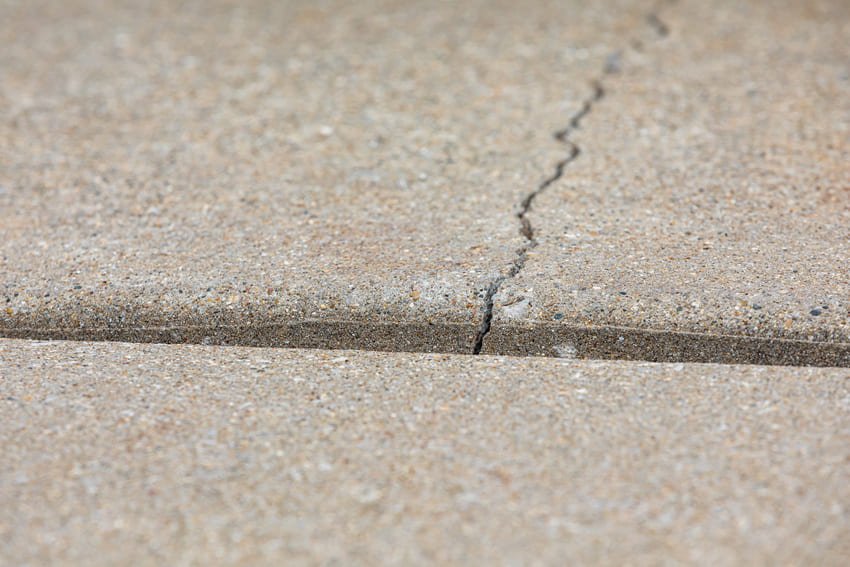
A few thin lines in the asphalt. A hairline fracture snaking across the gravel apron. A jagged gap at the edge of the concrete pad. Most homeowners notice driveway cracks the way they notice a gray hair — with a sigh, a mental note, and a promise to “deal with it later.” But here’s the uncomfortable truth: a driveway crack is never just a cosmetic flaw. It’s an early warning system, and the longer you ignore it, the more expensive the message becomes.
The good news? Most driveway damage is completely preventable — and fixable. Understanding why cracks form in the first place is the first step toward a driveway that stays smooth, safe, and solid for decades instead of crumbling into a patchwork of patches.
Why Do Driveways Crack in the First Place?
Driveways look like simple slabs of material, but they’re actually complex structures with layers doing very different jobs. Beneath the surface, you can see — whether that’s asphalt, concrete, or gravel — sits a base layer of compacted aggregate that carries the weight of your vehicles. When that base fails, the surface fails with it. That’s why driveway crack repair is rarely just about filling a line; it’s about understanding what’s happening underneath.
The most common culprits include:
Water and poor drainage. Water is the number one enemy of any driveway. When runoff pools at the base or seeps into cracks, it softens the soil beneath, washes away fine aggregate, and creates voids. Every vehicle that drives over those voids makes the surface flex, and flexing leads to cracking)Skip.
Freeze-thaw cycles. In climates with cold winters — like the Pacific Northwest, where frost creeps into the ground and then retreats — water trapped in tiny cracks freezes and expands. Each cycle pries the crack open a little wider. What starts as a hairline fracture in October can be a gaping fissure by March.
Base failure and poor compaction. If the ground beneath your driveway wasn’t properly graded and compacted before the surface was laid, settlement is inevitable. The surface follows the base down, and cracks appear along the lines of that movement.
Tree roots and vegetation. Roots from nearby trees and aggressive brush don’t just grow under driveways — they lift them, crack them, and redirect drainage in ways that accelerate damage. Overgrown vegetation along the edges can also trap moisture against the surface.
Heavy loads and age. Every driveway has a design life. Heavy trucks, RVs, and equipment accelerate wear, and even the best-built driveway will eventually show its age.
Why Small Cracks Are a Big Deal?
It’s tempting to shrug off a narrow crack as harmless. But consider what happens next: rain finds the crack, seeps down to the base, and begins the slow process of undermining everything above it. The crack widens. Edges crumble. Water carves channels. Before long, you’re not looking at a crack anymore — you’re looking at a pothole, a rut, or a section of driveway that has sunk several inches.
Cracks also create safety hazards. Uneven surfaces are trip hazards for pedestrians and jarring for vehicles. They collect debris, harbor weeds, and give your property a neglected look that undermines curb appeal. And if you’re ever planning to sell, a badly cracked driveway is one of the first things buyers notice — and one of the first things they’ll ask you to discount.
The math is simple: a small investment in driveway crack repair today almost always costs a fraction of what a full driveway replacement will cost in a few years.
DIY Patch Kits vs. Professional Driveway Crack Repair
Walk into any home improvement store, and you’ll find shelves of crack filler, cold-patch asphalt, and self-leveling sealant. For a tiny, isolated crack on an otherwise healthy driveway, a DIY kit can be a reasonable stopgap. But it’s important to understand what those products can and can’t do.
Store-bought fillers are surface treatments. They fill the visible gap but do nothing about the cause — the drainage problem, the base failure, the poor slope, or the root pressure that created the crack in the first place. That’s why DIY repairs so often fail within a season or two. The filler cracks, the edges crumble, and you’re back at the store buying another tube.
Professional driveway crack repair takes a different approach. Instead of asking “what does this crack look like?” a good contractor asks “why is this crack here?” That means looking at the whole driveway as a system: the slope, the drainage patterns, the soil type, the condition of the base, and the way water moves across the property. Only then does the repair begin — and it begins from the ground up.
What a Proper Repair Process Looks Like?
A lasting repair follows a sequence that’s been proven over decades of driveway work:
1. Inspection and diagnosis. A professional crew starts by measuring slope, evaluating soil conditions, and tracing drainage patterns. They identify whether cracks are surface-level or signs of deeper base failure, and whether vegetation or debris is contributing to the problem.
2. Addressing the cause. If drainage is the issue, the repair includes regrading so water moves away from the structure instead of pooling on it. If roots or overgrown brush are involved, clearing that vegetation is part of the job — because no amount of crack filler will hold if a root is still pushing up from below.
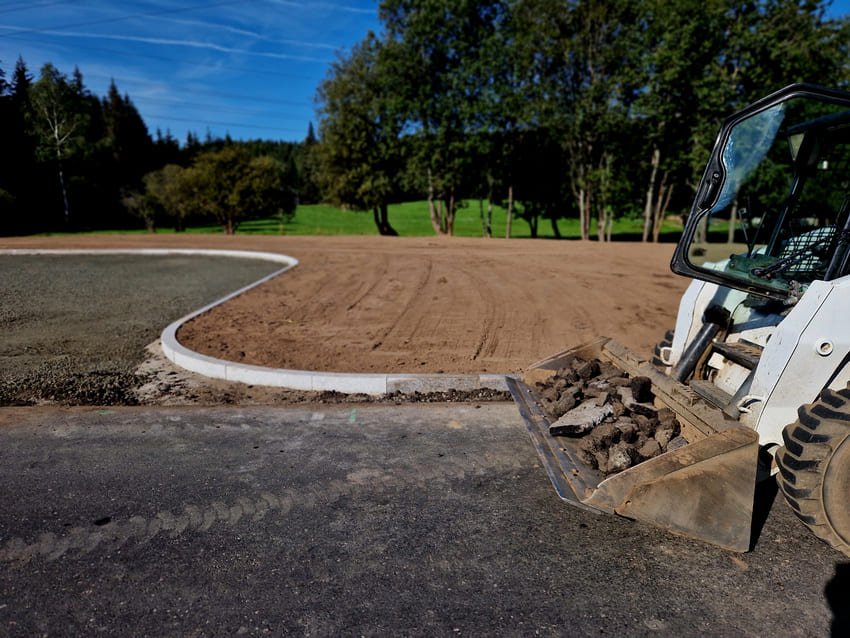
3. Base repair and compaction. For more serious damage, the failed material is removed down to the base, new aggregate is brought in, and the layers are compacted to meet load-bearing requirements. This is the step that separates a repair that lasts from one that fails again next spring.
4. Surface repair. With a solid base in place, the surface is repaired using materials matched to your driveway type, traffic levels, and local weather conditions — whether that’s asphalt patching, gravel replenishment, or concrete work.
5. Follow-up and maintenance. The best contractors don’t disappear after the job. They check that drainage is working as intended, make small adjustments if needed, and give you a clear maintenance plan so your driveway stays in good shape for years.
The Role of Grading in Lasting Driveway Repairs
Here’s something most homeowners don’t realize: the single most important factor in whether your driveway cracks is the slope it sits on. Proper grading directs water away from the surface and toward drainage points where it can’t do damage. Poor grading — even by a few degrees — lets water pool, saturate the base, and start the crack cycle all over again.
That’s why the most effective driveway crack repair isn’t just a patch. It’s a regrade. When a contractor reshapes the driveway so water flows off it cleanly, they’re not just fixing today’s cracks — they’re preventing tomorrow’s. Grading also smooths out low spots, eliminates ruts, and creates a driving surface that feels new even when it isn’t.
When to Call a Professional?
Some signs that your driveway has moved past the DIY stage:
- Cracks wider than a quarter-inch, or cracks that keep returning after filling
- Multiple cracks in the same area, suggesting base movement
- Potholes, ruts, or sunken sections
- Water pooling on the surface after rain
- Crumbling or deteriorating edges
- Cracks accompanied by nearby tree growth or invasive vegetation
If any of these sound familiar, it’s time to stop patching and start planning. A professional assessment costs little — most reputable contractors offer free on-site inspections — and it gives you a clear picture of what’s actually wrong and what it will take to fix it right.
The Best Repair Is the One You Never Need
Once your driveway is repaired and properly graded, a little routine maintenance goes a long way. Keep drainage paths clear of debris. Replenish gravel in low spots before they become ruts. Control vegetation along the edges so roots and moisture don’t creep back in. Seal small cracks early, while they’re still small. And if you live in a fire-prone area, keeping the driveway margins clear isn’t just good for the driveway — it’s good for your home’s defensible space.
Think of your driveway as a long-term investment rather than a surface you drive on. It’s the first thing visitors see, the path emergency vehicles use, and the foundation of your property’s curb appeal. A few hours of attention each year — or a professional maintenance visit on a schedule that matches your usage — can add years to its life and thousands of dollars to your savings.
Give Your Driveway a Fresh Start with Professional Crack Repair
Cracks are normal. Ignoring them is the mistake. Whether you’re dealing with a single hairline fracture or a network of fissures that have been growing for seasons, the fix is the same: find the cause, repair the base, fix the surface, and make sure water can’t undo the work.
Done right, driveway crack repair isn’t a patch — it’s a reset. Your driveway gets a second life, your property gets a cleaner look, and you get the peace of mind that comes from knowing the problem is actually solved, not just covered up. If your driveway is showing signs of trouble — or you’d simply like a professional opinion on its condition — schedule a professional driveway crack repair assessment and get a clear, no-pressure plan for bringing your driveway back to its best. A smooth, safe, well-drained driveway isn’t a luxury. It’s one of the smartest investments you can make in your property — and the sooner you start, the less it costs.